
Giuseppe PirozziWhen I decided to write and then explore the earth
The ‘Prayers’ are in the House of Art.
In preparation for the Exhibition sponsored by the Pinacoteca di Montoro, I was asked to prepare a critical reflection, but unable to quickly reach Giuseppe Pirozzi’s studio in Naples, as I had hoped and was used to. A few weeks ago, I received the editorial and photographic documentation dedicated to his artistic history and the succession of his sculptural cycles. I also requested some photographs, which arrived promptly, to try to ideally bridge the gap between us, confident that—even knowing I couldn’t complete the experience with our verbal exchange—they would allow me to enter and circulate within the studio, moving among works that testify to periods of expression distant from one another in time.
Although I was unable to directly compare the artifacts of a plastic work developed over a long period of time, my attention immediately focused on the most recent cycle of polychrome terracottas, thus suggesting that the Exhibition focus as much as possible on those “one hundred panels” exemplarily encapsulated in the title “Prayers.” Knowing perfectly the clear characteristics of the museum space, the warm, residential dimension of a House of Art, I had the precise sensation of how much the expressive force of those figurative texts would impact a participatory fruition, a process of observation that would become ‘reading’.
“…glued-broken-numbered-re/glued…”
Standing before the succession of those panels, immediately attuned to the liturgical flow of a whole physicality detailed within it by color, fragment after fragment emerges, exceptionally ahead of the text itself, the title of the exhibition, “If I Offer You to Leaf Through My Land.”
Compared to the years marked by a linguistic process based on construction, responding to a spatial organization that systematically controls the dialogue of the iconographic values involved, capable of managing and restraining every attempt of an aformal material to expand, the free grammar of the “sheet” fully asserts itself, thanks to the anthropological values within the “land,” and takes shape, in which Pirozzi distributes through transcription what the whispering of prayer suggests to the working of the hand. Abandoning the constraints of bronze, freed from the constraints of its civil history, I have the impression that the artist, having avoided the rhetorical marginalization of territoriality, has embarked on that unprecedented expressive path based on the complete and courageous autonomy of ‘risk,’ itself the precious fruit of experimentation, because experimentation is achieved only when experience, combined with the intimate freedom of thought, offers its availability and accompanies you toward the dialectical unity of the work; broken and furrowed, stitched and mended—the clot is in the sheet—fragmented along the path of its own experience, glued-broken-numbered-re-glued, never cited, but transcribed and “offered” by the artist to the reader’s story, imagination, emotion, perhaps to his maturing in the complexity of feeling: “When I decided to write and then to leaf through the earth.”
A shaky ‘catasta’ is the archiving of many pages of earth.
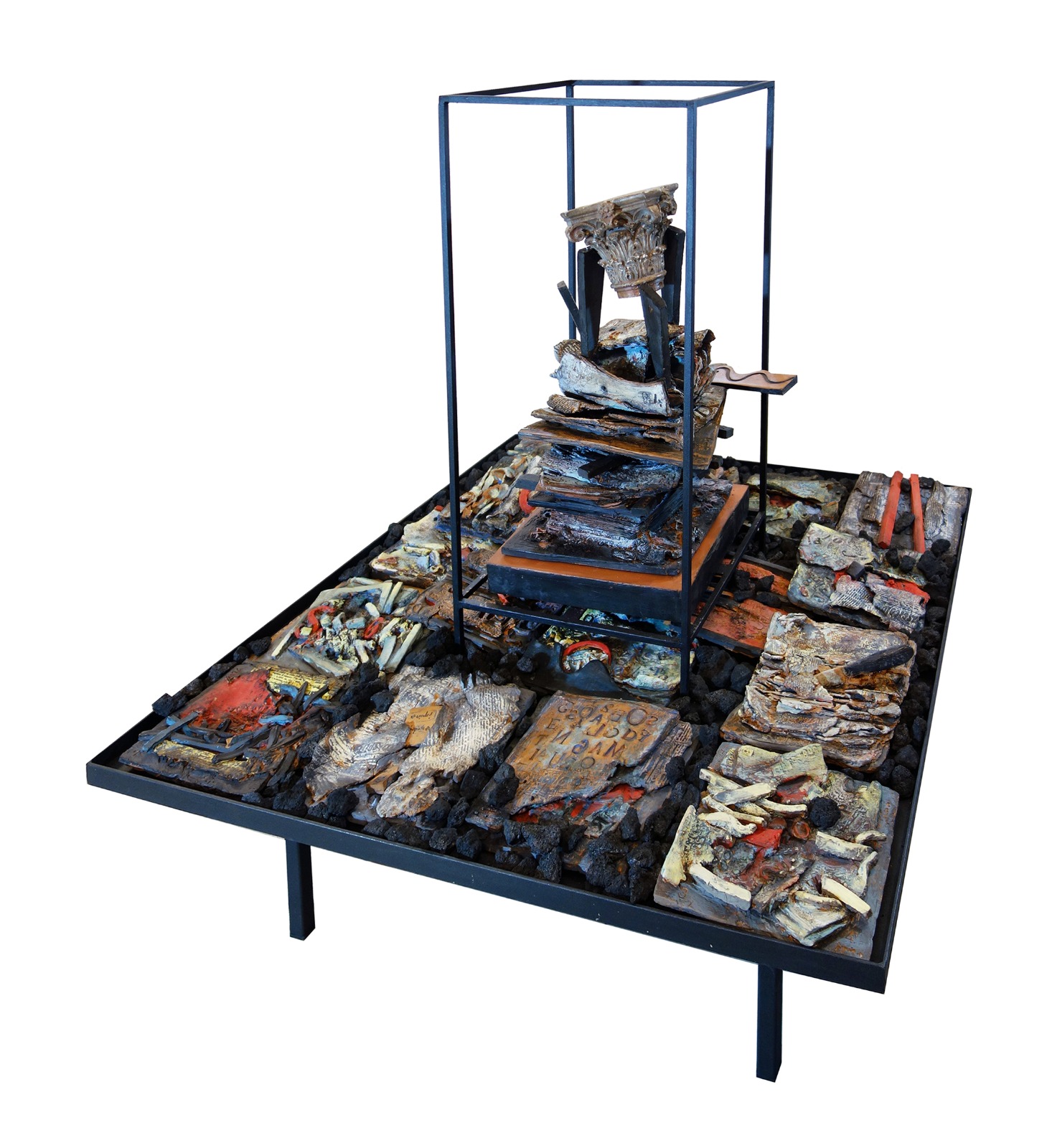
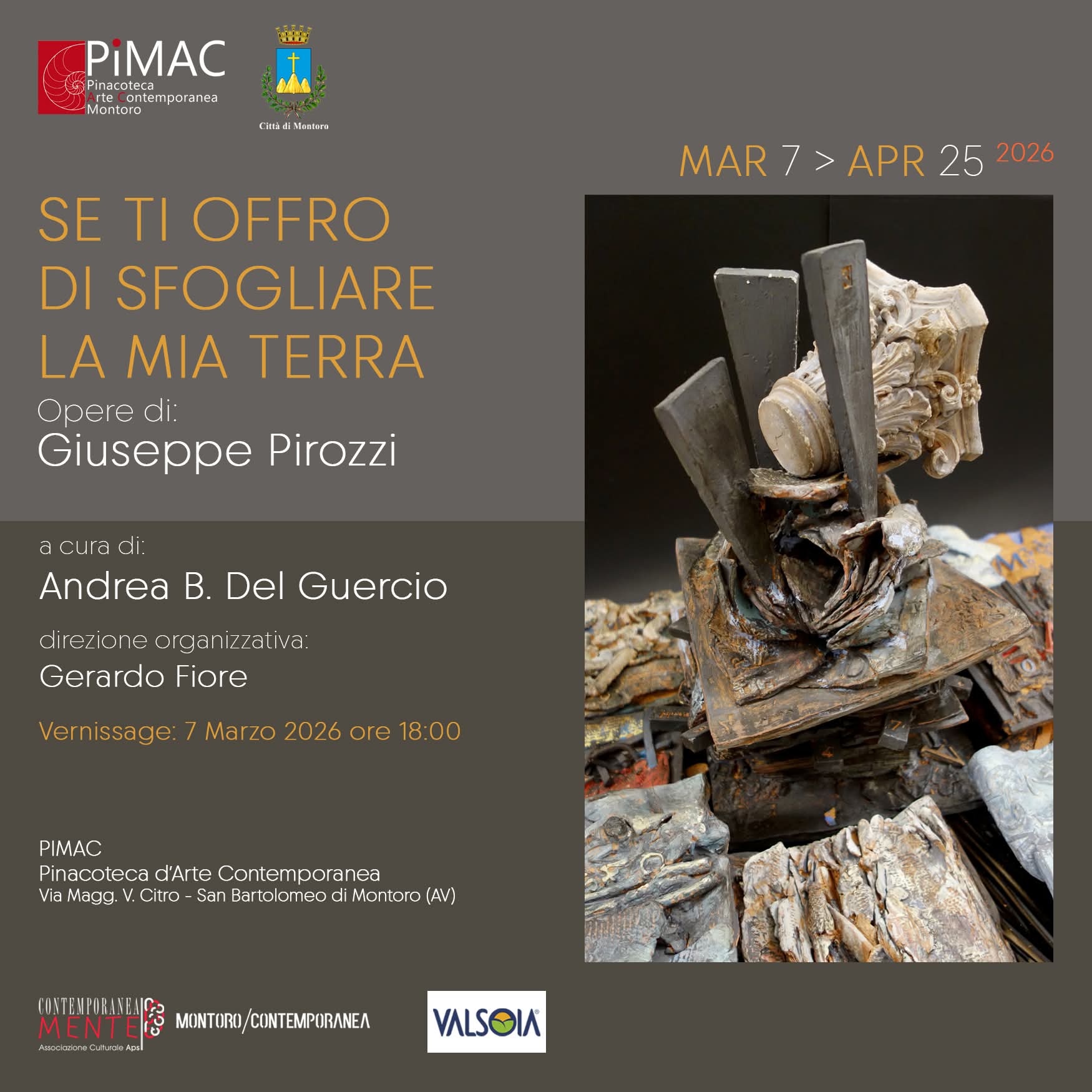
When Pirozzi decides to “write” a book of earth, a practical testimony to an entire experience within the history of his noble land of great cultures, and then allows us to “leaf” through his “pages of painted sculpture,” the need arises to provide a support surface, a low table/bed frame, serving as an expanded display within which the gaze can immerse itself, lingering on those ever-changing details that mark the unstable physicality of the planes, while the Black, the tangible result of a carbonization of the material, frames the physical polychrome variables of the Whites and Oranges, the Blues and Azures.
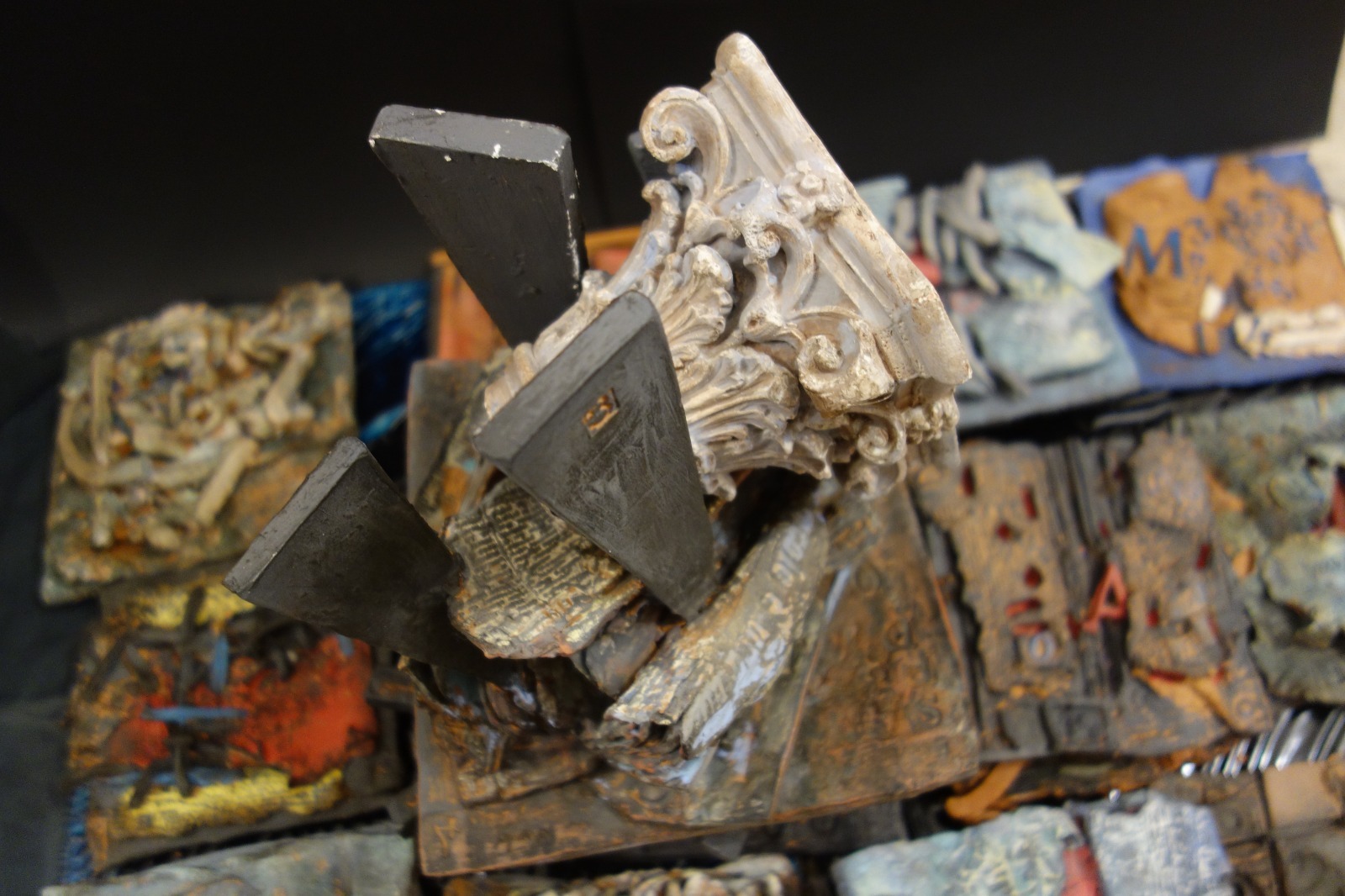
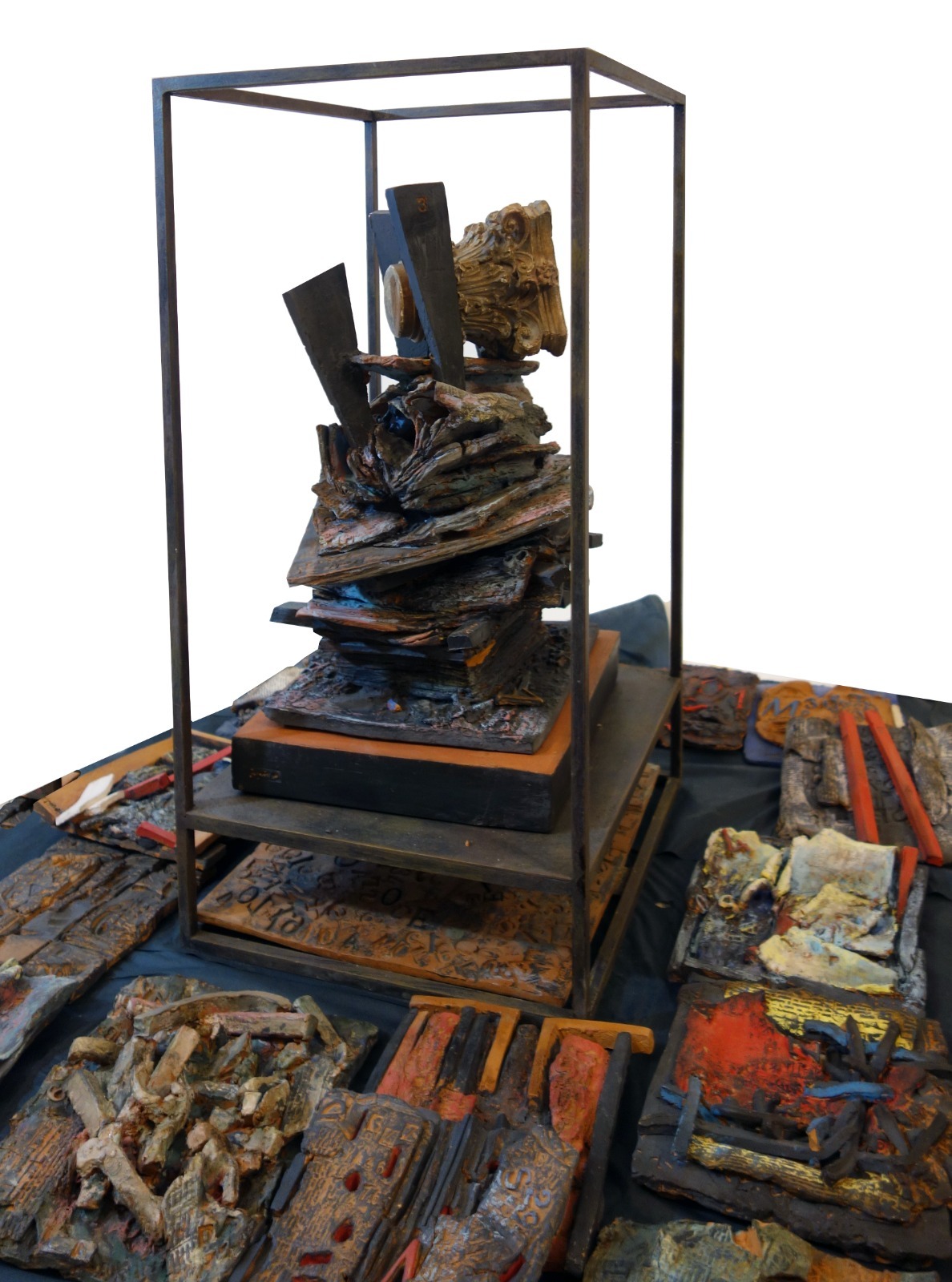
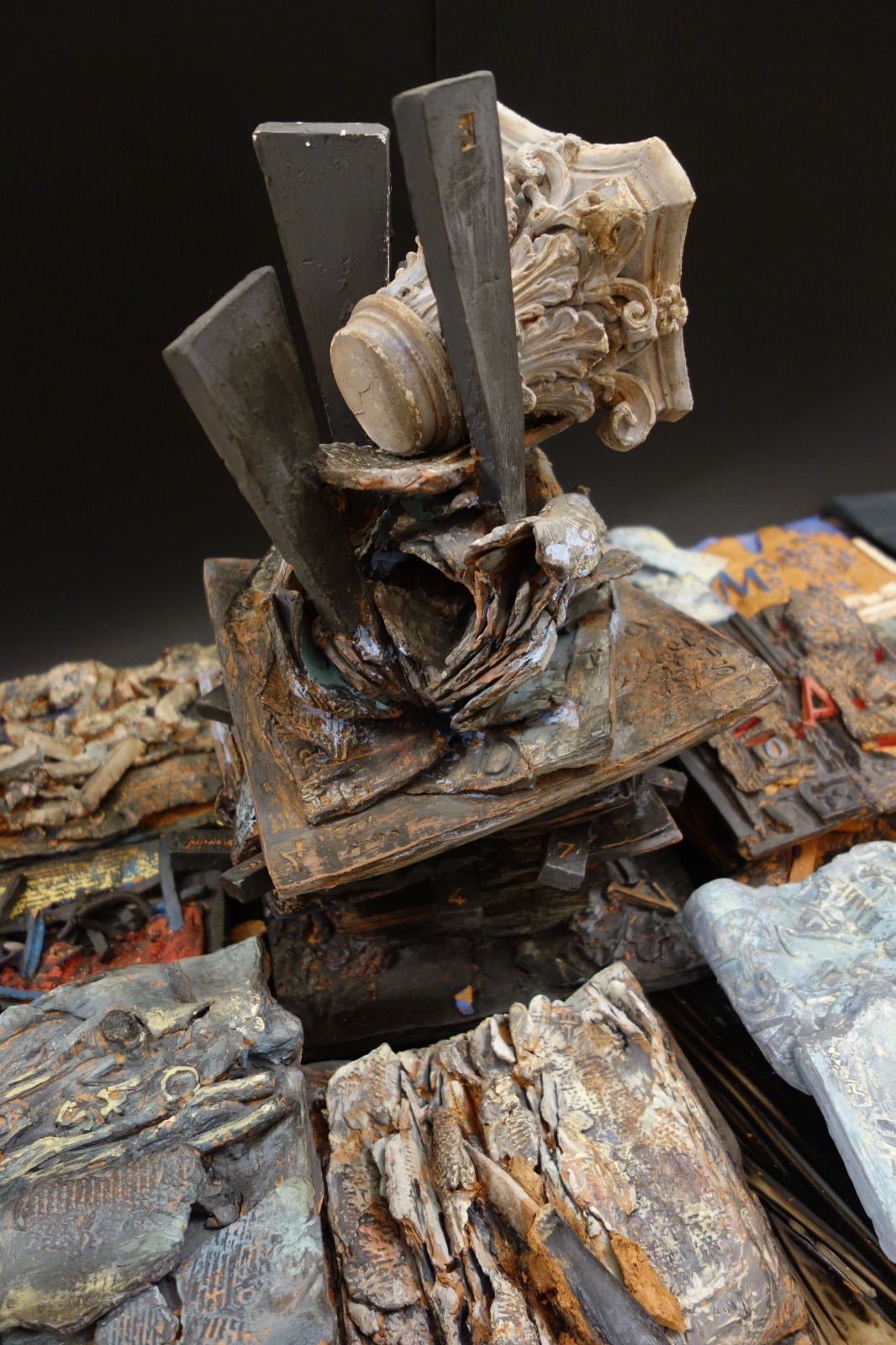
Observation loses the comforts of stability, forced to circumnavigate the quadrilateral development of the installed work, following—from the tomb to the altar—what is specific to monumental sculpture, throughout its ancient history. It is along this historical line that the design dimension of “Respiro” fits and positions itself, exemplarily underlined by the impact of a central “pile,” the emotionally transgressive fruit of an orchestrated stratification, the shaky archiving of many “pages of earth”: “confidential” testimony to an expressive maturity that has benefited, without self-referentiality and devoid of rhetoric, from the transmission of the craft of art: “What separates contemporary art from art from the historical sense of the term is that which lasts from an economy of gift and not from a speculative and commercial economy.” (Francois Dérivery)
The “painted sculpture,” as I learn directly from the expert voice of Pirozzi, is the result of a process that, translating from the French “englober,” allows the color to be applied to the clay when it is essentially dry and awaits its first and only firing.
This technical indication, where color “covers” (englobes-inglobates) the physical structure of the material, perfectly explains the research, and immediately the aesthetic perception inherent in opacity, in its values that bear witness to psychological nuances—intimacy and melancholy—and, I would add, literary and poetic—languor and nostalgia: “I claim the right to opacity, it is to say not to be fully understood and not to fully comprehend others.” (Eduard Glissant).
By avoiding the transparencies and refinements typical of the use of oxides, Pirozzi provides us with the full consistency of his sculpture intact, and with it the value of testimony to his visual thought. The way in which color is managed gives tangibility to the surfaces and the fragments inscribed within them, produces an archaic concreteness to the plastic body, determines the independence of the letter through expressionist ‘underlining’, wedges itself between the thicknesses and highlights ‘forgotten’ lumps of matter, at times carries out the same erasure, while allowing the ancestral nature of the same earth on which everything is distributed and transcribed to emerge.
Giuseppe PirozziQuando ho deciso di scrivere e poi di sfogliare la terra.
Le ‘Preghiere’ stanno nella Casa dell’Arte.
In vista dell’Esposizione voluta dalla Pinacoteca di Montoro, chiamato a predisporre una riflessione critica, ma non potendo raggiungere in tempi brevi lo Studio di Giuseppe Pirozzi a Napoli, come sarebbe stato mio desiderio e prassi, ho ricevuto da alcune settimane la documentazione editoriale e fotografica dedicata alla sua storia artistica ed alla successione dei Cicli scultorei; ho ulteriormente richiesto anche alcuni scatti, subito arrivati, per provare ad accorciare idealmente le nostre distanze, sicuro che – pur sapendo che non avrei potuto completare l’esperienza con il nostro scambio vocale – mi avrebbero permesso di entrare e circolare all’interno dello Studio, muovendomi tra opere testimoni di periodi espressivi tra di loro lontani nel tempo.
Pur non avendo potuto usufruire di un confronto diretto con i manufatti di un lavoro plastico sviluppatosi in un ampio arco temporale, la mia attenzione è immediatamente andata a soffermarsi sul più recente Ciclo di terrecotte policrome, così da suggerire che l’Esposizione si concentrasse il più possibile su quelle ‘cento formelle’ racchiuse esemplarmente nel titolo “Preghiere”; conoscendo perfettamente i limpidi caratteri dello spazio museale, la calda dimensione abitativa di una Casa dell’Arte, ho avuto la precisa sensazione di quanto la forza espressiva di quei testi figurativi avrebbero inciso su una partecipata fruizione, su un processo di osservazione che si sarebbe fatto ‘lettura’.
“…incollata-rotta-numerata-re/incollata…”
Ponendomi difronte alla successione di quelle formelle, entrando immediatamente in sintonia con lo scorrere liturgico di tutta una fisicità che il colore dettaglia al suo interno, frammento dopo frammento nasce, eccezionalmente in anticipo sul testo stesso, il titolo dell’Esposizione “Se ti offro di sfogliare la mia terra”.
Rispetto agli anni contrassegnati da una processualità linguistica fatta per costruzione, rispondente ad una organizzazione spaziale che controlla sistematicamente il dialogo dei valori iconografici coinvolti, in grado di gestire e trattenere ogni tentativo di una materia aformale di espandersi, si afferma pienamente, grazie ai valori antropologici che stanno all’interno della ‘terra’, e prende corpo la libera grammatica del ‘foglio’, in cui Pirozzi distribuisce per trascrizione ciò che il bisbigliare della preghiera suggerisce all’operatività della mano.
Abbandonando i condizionamenti del bronzo, liberatosi dall’obbligo della sua storia civile, ho l’impressione che l’artista, evitata la retorica emarginazione della territorialità, sia andato a percorrere quel tracciato espressivo inedito che si fonda sulla completa e coraggiosa autonomia del ‘rischio’, a sua volta frutto prezioso della sperimentazione, perché alla sperimentazione si giunge solo quando l’esperienza, combinata con l’intimità libertà del pensiero, offre la sua disponibilità e ti accompagna verso l’unità dialettica dell’opera; spezzata e solcata, cucita e rammendata – nel foglio sta il grumo – frammentata nel percorso del proprio vissuto, incollata-rotta-numerata-re/incollata, mai citata, ma trascritta ed “offerta” dall’artista al racconto, all’immaginazione del lettore, alla sua emozione, forse al suo maturare nella complessità del sentimento: “Quando ho deciso di scrivere e poi di sfogliare la terra”.
‘Catasta’ malferma è archiviazione di tante pagine di terra.
Al momento in cui Pirozzi decide di “scrivere” un libro di terra, testimonianza operativa di tutto un vissuto dentro la storia della sua nobile terra di grandi culture, e poi permette a noi di ‘sfogliare’ le sue ‘pagine di scultura dipinta’, prende corpo la necessità di fornirsi di un piano di appoggio, di un tavolo basso/la struttura di un letto, con valore di espositore dilatato al cui interno lo sguardo si possa immergere, soffermarsi su quei particolari sempre diversi che contrassegnano a sbalzo la fisicità instabile dei piani, mentre il Nero, frutto tangibile di una carbonizzazione della materia, riquadra le fisiche variabili policrome dei Bianchi e degli Aranci, degli Azzurri e dei Blu.
L’osservazione perde le comodità della stabilità, obbligata a circumnavigare lo sviluppo quadrilatero dell’opera installata, seguendo – dal sepolcro all’altare – ciò che è proprio della scultura monumentale, lungo la sua antica storia. È su questa linea storica che si inserisce e si pone la dimensione progettuale di “Respiro”, esemplarmente sottolinea dall’incidenza di una ‘catasta’ centrale, frutto emozionalmente trasgressivo di una orchestrata stratificazione, malferma archiviazione di tante ‘pagine di terra ’: ‘confidenziale’ testimonianza di una maturità espressiva che ha beneficiato, senza autoreferenzialità e priva di retorica, della trasmissione del mestiere dell’arte: “Ce qui sépare l’art contemporain de l’art au sens historique du terme est que ce dernier relève d’une économie du don et non pas d’une économie spculative et marchand”. (Francois Dérivery)
La ‘scultura dipinta’, come apprendo direttamente dalla voce esperta di Pirozzi, è frutto di un processo che, traducendo dal francese “englober”, permette una stesura del colore sulla terra quando questa è tendenzialmente asciutta, ed attende la sua prima ed unica cottura.
Questa indicazione tecnica, dove il colore ‘copre’ (englobe-ingloba) la struttura fisica della materia, spiega perfettamente la ricerca, e subito la percezione estetica insita nell’opacità, nei suoi valori testimoni di sfumature psicologiche – intimità e melanconia -, aggiungerei letterari e poetici – languore e nostalgia: “Je revendique le droit à l’opacité, c’est-à-dire à ne pas être pleinement compris et à ne pas comprendre pleinement les autres.” (Eduard Glissant).
Evitando le trasparenze e le raffinatezze proprie di un utilizzo degli ossidi, Pirozzi ci fornisce intatta tutta la consistenza della propria scultura, e con essa il valore di testimonianza del suo pensiero visivo. La modalità di gestione del colore fornisce tangibilità alle superfici ed ai frammenti che vi si inscrivono, produce concretezza arcaica al corpo plastico, determina l’indipendenza della lettera attraverso la ‘sottolineatura’ espressionista, si incunea tra gli spessori e mette in evidenza grumi ‘dimenticati’ di materia, opera a tratti la stessa cancellazione, pur permettendo l’affiorare della natura ancestrale della stessa terra su cui tutto si distribuisce e si trascrive.